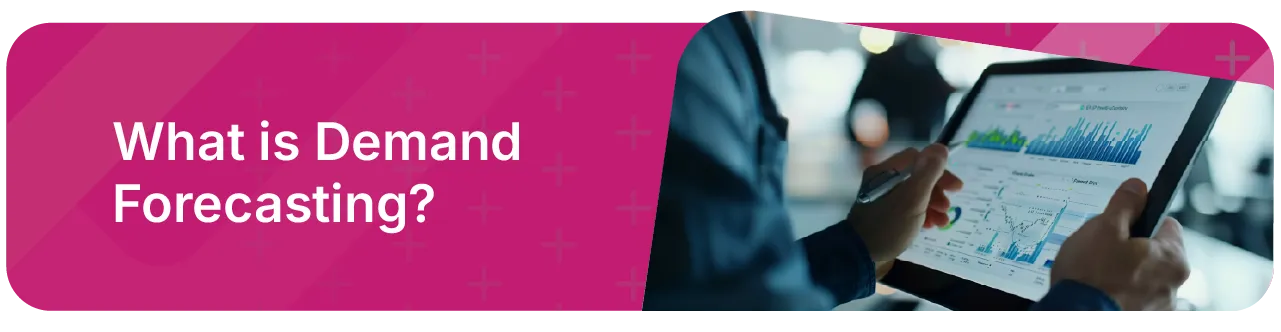
What is Demand Forecasting?
Demand forecasting explained: how distributors predict demand, manage inventory and improve cash flow.
5 minutes

Demand forecasting is the process of predicting future customer demand so you can plan inventory, purchasing, and staffing more accurately. Businesses use demand forecasting (Also called demand planning or inventory forecasting) to determine what products customers will buy, how much they’ll buy, and when they’ll need them.
If you run a distribution company, auto parts warehouse, equipment rental business, or even a repair shop, you’re already doing this even if you don’t call it demand forecasting. You look at past sales, think about seasonality, factor in promos or price changes, and decide what to reorder. The real question is whether you’ve got a proactive, data-backed process, or if you’re stuck reacting.
Why it matters
Getting demand wrong gets expensive fast. Forecast too low and you’re scrambling to rush-order inventory and paying higher supplier costs. You also miss sales and frustrate customers, increasing the risk of losing them to a competitor when they’re forced to shop elsewhere.
But forecast too high and you risk sitting on excess inventory. This can result in tying up cash, running out of warehouse space, or discounting to move dead stock.
In many industries where margins aren’t huge to begin with, inventory mistakes eat into profit quickly. That’s why successful demand forecasting for distributors and warehouse operations directly impacts profitability.
How demand forecasting works
At its core, demand forecasting looks at a few key things:
- Historical sales data: What sold last month? Last year? During the same season?
- Trends: Are certain SKUs growing or slowing down?
- Seasonality: Snow parts in winter. AC parts in summer. You get it.
- External factors: Price changes, new competitors, economic shifts.
- Customer behavior: Are buying patterns changing?
Modern forecasting tools use software to analyze this data and suggest reorder quantities automatically. Old-school forecasting tends to rely on spreadsheets and instinct, which are both valuable but don’t scale well.
Types of demand forecasting
You’ll usually hear about two main types:
- Qualitative forecasting: This is experience-based. Think sales team input, market knowledge, or generally “we think this will sell”.
- Quantitative forecasting: This is data-driven. Modern tools can analyze historical numbers and calculate expected demand using real-time forecasting models.
Most healthy businesses use a mix of both: data gives you the baseline, and human insight adjusts for reality. That balance is the best practice in modern demand planning.
What happens without it?
If you’re constantly dealing with:
- Stockouts
- Rush buys
- Overstocked slow movers
- Cash flow pressure
- Emergency transfers between branches
You likely don’t have a strong inventory forecasting process in place, even if you think you do. A lot of businesses rely heavily on reactive ordering. The problem is that reactive inventory costs more and creates chaos downstream in the warehouse and delivery routes.
When it’s time to upgrade your approach
Demand forecasting is simply planning inventory based on expected customer demand instead of reacting to it after the fact. Do it well, and you protect margin and cash flow. Ignore it, and inventory quietly runs your business.
It’s probably time to modernize if your forecasting process still lives in spreadsheets, someone’s head, or static reorder points that don’t easily adapt to change.
Modern demand forecasting uses real sales data, trends, and system-driven insights to help guide purchasing decisions. Instead of scrambling to fix stockouts or overbuying “just in case,” you gain clearer visibility into what’s moving, what’s slowing down, and what needs attention.
No forecast is 100% accurate. Markets shift, and customers can always surprise you. The goal isn’t to predict the future perfectly. Instead, optimized demand forecasting aims to reduce surprises, remove purchasing headaches, protect margin, free up cash, and improve customer service.
Moving from reactive to proactive
As businesses grow, forecasting gets harder to manage manually. What worked when you had fewer products, fewer customers, or fewer locations starts to break down.
That’s where Klipboard comes in. Klipboard helps distributors and operational businesses of all sizes use real sales data to drive smarter purchasing decisions. Instead of reacting to shortages or overbuying “just in case,” you get clearer visibility into what’s moving, what’s slowing down, and what to reorder (and when).
If you’re curious what that could look like in your operation, speak with one of our experts. We’ll walk through your current process, pressure points, and where forecasting could tighten things up.
Contributors

Share
Related resources

Choosing a new ERP system is one of the highest-stakes decisions an operations leader makes. Beyond just selecting software, you're choosing the team that will guide your entire organization through a fundamental change in how it works. And the research is clear on one point: the software itself is rarely what makes or breaks the outcome.