Asset tracking in rental: why knowing where equipment is isn’t enough
Rental margins are under pressure. Customers expect more. Assets are expensive. Yet many rental businesses are still making key decisions with only part of the picture.
5 minutes

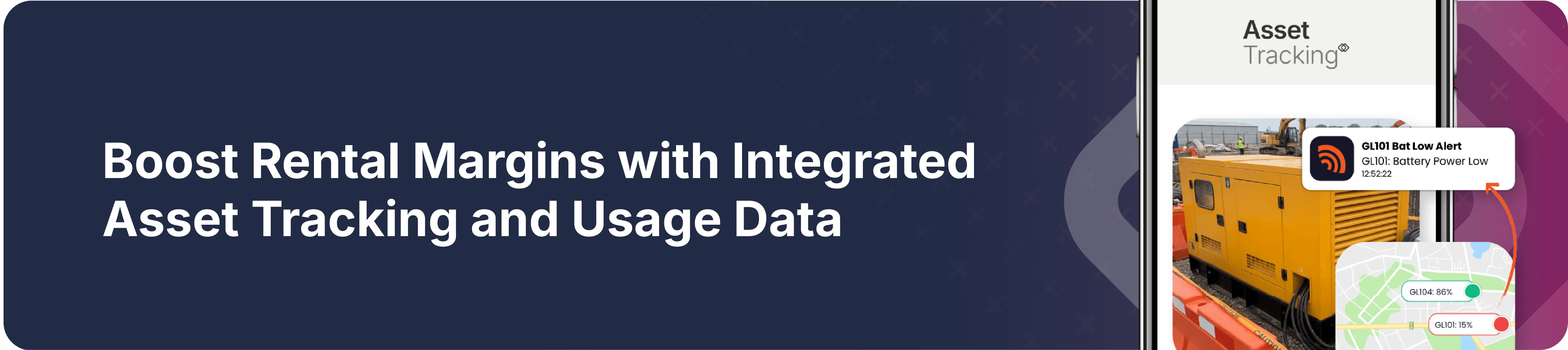
Most already track their assets. They know where equipment is.
Far fewer know how it’s actually being used, and this is where value is often lost.
The misconception: asset tracking is just about theft
For many rental businesses, asset tracking starts and ends with theft prevention. Location data and geofencing matter, especially for high-value plant, but theft is rarely the biggest commercial issue.
The bigger challenges tend to be:
- Servicing done too early or too late.
- Assets over-worked without visibility.
- Missed usage at the end of hire.
- Inefficient redeployment.
- Decisions based on assumption, not data.
This is where usage insight, not just location, makes the difference.
Where margins quietly erode
In many rental businesses, margin loss doesn’t come from one big issue, it comes from a series of small, hard-to-see gaps. Servicing is often scheduled by time rather than real usage, meaning equipment can be serviced too early, too late or not in line with manufacturer guidance. Assets may continue to be used after off-hire but before collection, with that extra usage rarely recovered. And without clear visibility, it’s difficult to spot customers, jobs or assets that consistently drive higher wear.
Individually, these issues may seem minor. Over time, they quietly add cost, increase risk and make pricing, planning and asset investment decisions harder than they need to be.
What changes when usage is visible
When rental businesses can see how long equipment is actually running, decisions improve:
- Servicing is planned around real usage.
- Breakdowns reduce.
- Assets stay compliant for longer.
- Usage patterns inform pricing and contracts.
Just as importantly, teams rely less on manual checks and instinct.
Why integration is where the real value lies
Asset tracking alone provides data. Integrated with the rental system, that data becomes insight.
When location and usage sit alongside hire status, availability and service history, teams get a single, reliable view of each asset. That makes it easier to:
- Redeploy equipment faster.
- Reduce unnecessary purchases.
- Improve logistics efficiency.
- Make confident day-to-day decisions.
This is where tracking stops being a tool and starts supporting the operation.
Better insight means better service
Clearer visibility doesn’t just benefit the rental business, it improves the customer experience too:
- Fewer breakdowns.
- Less disruption on site.
- More proactive maintenance.
- Clearer, more transparent usage information.
Reliability like this is often what keeps customers coming back.
From safety net to commercial advantage
Asset tracking in rental has evolved. It’s no longer just about knowing where equipment is, it’s about:
- Protecting margins.
- Reducing avoidable cost.
- Improving utilisation.
- Delivering a more reliable service.
When tracking is connected to rental operations, it becomes a commercial advantage, not just a safeguard.
Want to learn how integrated asset tracking fits into your rental operation?
Explore how Klipboard helps rental businesses turn asset data into better decisions, click here.
Contributors
Share
Related resources

See why modern equipment rental businesses are shifting to cloud management systems tailored to their industry. Explore the benefits of connected data, mobile tools, and the best equipment rental software for scaling your operations.