CRM for Distribution and Manufacturing: Driving Sales Success
Sales teams in distribution and manufacturing need fast access to accurate customer, pricing, and stock data to succeed in complex, fast-moving environments.
5 minutes

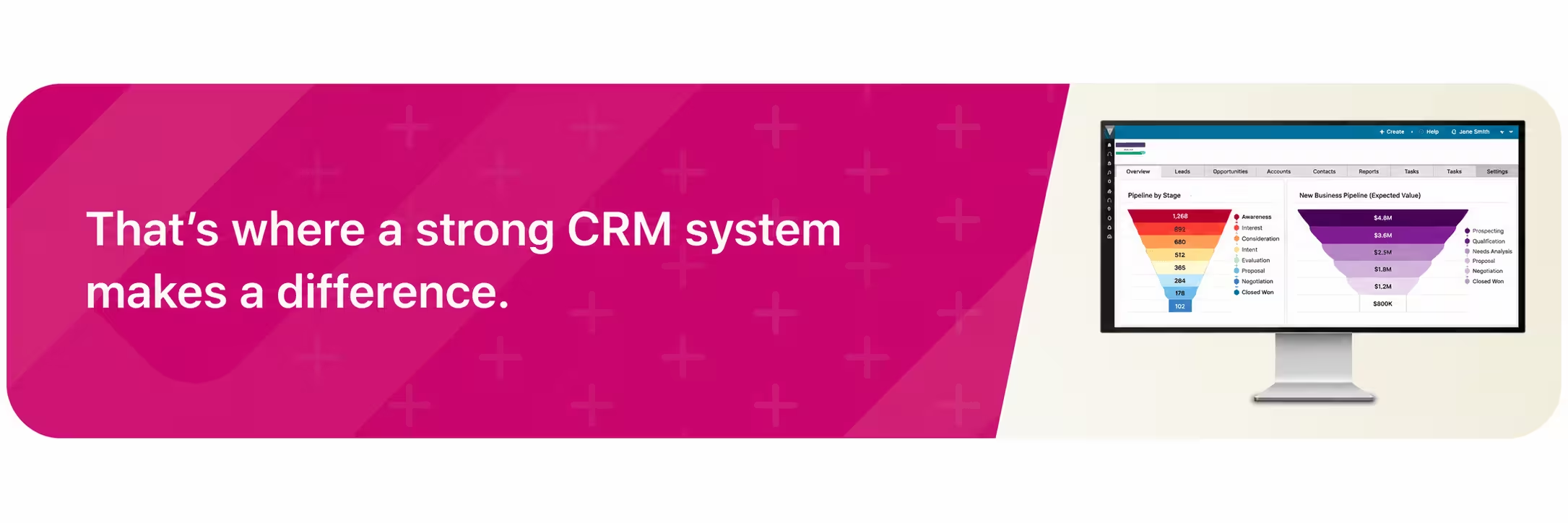
For both Sales Managers and Sales Associates, CRM (Customer Relationship Management) helps turn scattered information into something usable, and thus improving visibility, supporting better decisions, and helping teams focus on selling rather than administration.
For Sales Managers: Turning Complexity into Visibility
Sales Managers are responsible for much more than closing deals. They need to manage pipeline performance, support their teams, forecast demand, and align sales activity with operations.
In distribution and manufacturing, where stock levels, lead times and customer demand can shift quickly, visibility is critical.
1. More Accurate Forecasting
Without reliable data, forecasting often becomes guesswork.
A well-implemented CRM provides real-time visibility into the pipeline, helping managers understand:
- Which opportunities are genuinely progressing.
- Which products customers are likely to purchase.
- Which territories or sales reps are performing strongly.
- Where demand signals may impact production or stock planning.
Klipboard CRM strengthens forecasting accuracy and improves alignment between sales, operations and leadership teams.
3. Identifying Cross-Sell and Upsell Opportunities
In many mature distribution and manufacturing markets, growth often comes from expanding existing customer relationships.
CRM insights can reveal patterns such as:
- Customers who regularly buy certain product combinations.
- Accounts likely to benefit from additional product lines.
- Replenishment or reorder cycles.
- Opportunities linked to service requests or usage patterns.
Klipboard CRM highlights account trends and product relationships, helping sales teams identify natural cross-sell and upsell opportunities.
4. Better Alignment with Operations and Customer Service
Sales commitments affect far more than the sales team.
Pricing agreements, delivery promises and order volumes all influence operational planning.
When CRM data connects with ERP or service systems, teams across the business gain a shared view of customer activity.
This means:
- Sales teams share clearer demand signals.
- Operations can plan stock and capacity more effectively.
- Customer service teams understand what has been promised to customers.
Klipboard CRM connects customer activity with operational workflows, helping sales, service and operations teams stay aligned.
For Sales Associates: Simplicity, Speed and Confidence
While Sales Managers focus on strategy and forecasting, Sales Associates are focused on day-to-day customer interactions.
They manage large account portfolios, respond to enquiries quickly and navigate complex pricing structures.
A CRM becomes a practical daily tool that helps them stay organised and responsive.
Having this context readily available helps sales reps have more informed conversations with customers.
Klipboard CRM keeps customer history, pricing information and contacts in one place, making it easier for sales teams to prepare for every conversation.
2. Fewer Missed Follow-Ups
In busy sales environments, timing matters.
CRM systems help Sales Associates keep track of important actions by providing:
- Automated follow-up reminders.
- Alerts when customers haven’t ordered for a period of time.
- Tasks linked to pipeline stages.
- Notifications when quotes are approaching expiry.
Klipboard CRM automatically prompts follow-ups and reminders so opportunities don’t slip through the cracks.
3. Faster, More Accurate Quotations
Pricing in distribution and manufacturing often involves multiple variables such as discounts, customer agreements or product configurations.
When CRM systems integrate with pricing or product data, sales reps can:
- Build quotations more quickly.
- Reduce pricing errors.
- Ensure margins remain protected.
- Share proposals with customers faster.
Speed and accuracy can make a real difference when customers are comparing suppliers.
Klipboard CRM supports faster quotation workflows by connecting pricing, product and customer information in one place.
4. Clear Prioritisation of Daily Work
Sales teams often manage dozens or even hundreds of accounts.
CRM dashboards help sales reps focus their attention where it matters most by highlighting:
- Accounts likely to reorder soon.
- High-value opportunities nearing decision stages.
- Customers showing reduced purchasing activity.
- Potential cross-sell opportunities.
Klipboard CRM dashboards help sales teams prioritise the accounts and opportunities that matter most.
Shared Benefits Across the Sales Team
Although Sales Managers and Sales Associates use CRM differently, the benefits often overlap.
- Better customer experiences: Consistent, informed interactions help build stronger relationships.
- Less manual administration: Automation reduces repetitive tasks and frees up time for selling.
- Stronger collaboration across teams: Sales, operations and customer service all work from the same information.
- Clearer visibility of growth opportunities: CRM insights highlight where revenue potential exists.
Conclusion: CRM Supports Modern Sales Teams
For distribution and manufacturing businesses, sales success often depends on managing complexity effectively.
Customer relationships, pricing structures and operational constraints all influence the sales process.
A strong CRM helps Sales Managers gain visibility and control while giving Sales Associates practical tools that simplify daily work.
Together, this helps commercial teams operate more confidently, respond faster to customers, and identify opportunities that support long-term growth.
Klipboard CRM brings these capabilities together, helping distribution and manufacturing sales teams stay organised, informed and ready to act.
Want to see how CRM can support your sales team?
Discover how Klipboard CRM helps distribution and manufacturing businesses improve visibility, streamline customer management and support more effective sales conversations.
Request a 30-minute demo with a Klipboard specialist
Contributors