What is Buy Now, Pay Later (and How Does it Work)?
We've all been there. Large, unexpected bills rarely arrive at the right moment. But when something essential stops working, or a critical purchase can't wait, delaying until next month isn't an option.
5 minutes

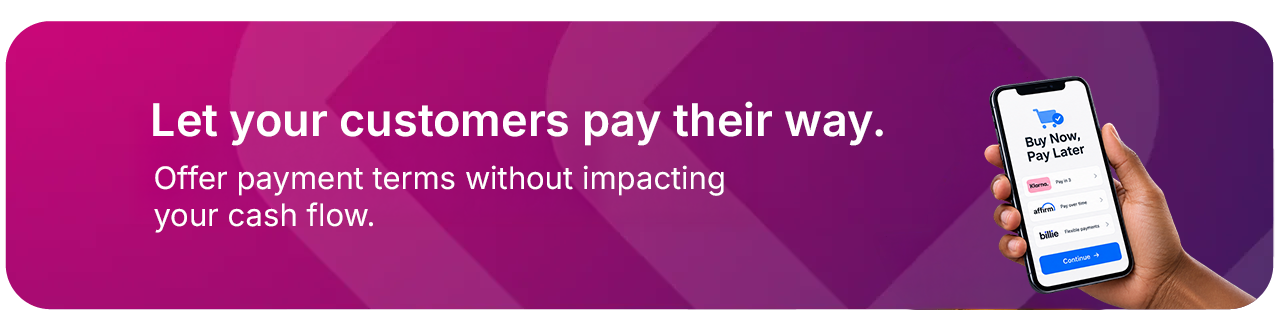
In the consumer world, having the option to spread costs over monthly payments has become the norm. Through providers like Klarna, buyers can buy everything from electronics and furniture to flights and expensive clothing, and break it up into smaller, more manageable payments.
Trade industries have taken longer to adapt. Traditionally, a large and unexpected bill that a customer couldn’t pay would have meant lost business – a buyer saying “I’ll think about it” and shopping with a competitor, or making a credit arrangement that works for the customer but less so for the merchant.
With the introduction of Buy Now, Pay Later, trade businesses now have another flexible payment method to meet the demands of customers. Here’s how it works.
What is Buy Now, Pay Later?
Buy Now, Pay Later (BNPL) lets customers receive goods/services at the point of sale and pay in instalments or after a set period.
Crucially, unlike trade credit, the merchant gets paid upfront – with no credit risk.
How does BNPL work?
The process for BNPL is simple and works as follows:
- At the checkout, a customer selects Pay Later, and fills in details e.g. name, address, card details for repayment.
- The BNPL provider (e.g. Klarna) makes an instant credit decision, which is approved in seconds.
- The customer selects a payment plan that suits their needs and completes the checkout process.
- The merchant receives the full payment upfront.
- The BNPL provider collects from the customer via their chosen plan e.g. the next two instalments are automatically charged every 30 days.
Why BNPL matters for trade businesses
Customer expectations are changing
Modern consumers are accustomed to transactions that feel convenient and effortless. Nearly two-thirds of shoppers still struggle with manually entering their card details, and 25% of carts are abandoned because checkout feels to slow and complicated.
These high expectations aren’t reserved for everyday purchases. Customers today are less patient, and they expect the same level of experience, whether they’re paying for groceries or ordering a large item for their business via a merchant.
Balancing customer demand and cash flow
Most trade businesses didn't set out to become credit controllers. Yet many spend valuable time managing overdue invoices and chasing payments.
Customers want flexibility and longer payment terms, while merchants need confidence they'll be paid on time. Get the balance wrong and the merchant either takes on more risk or risk losing business.
BNPL helps solve both sides of the problem. Customers get extra time to pay and keep cash available for other priorities, while merchants can get paid quickly without the risk and effort that often comes with offering credit.
Instead of spending time managing payments, businesses can focus on serving customers and growing sales.
How BNPL benefits customers
- Spread the cost of a big job without a credit card
Customers don’t always have a credit card available, and even if they do, they may not want to use a significant portion of their credit limit on a single purchase.
With BNPL, they have another way to manage large expenses, by splitting the cost into smaller and more manageable instalments. - No upfront cash needed, useful for unexpected bills and large purchases
Some bills, like a breakdown, you can’t prepare for. For instance, customers who are reliant on using their car every day, can spread the cost of repairs means they can get back on the road faster – instead of having to pay a hefty bill upfront or wait until payday to get the problem sorted. - Customers get net terms at checkout with a prior account relationship
While credit is common in many trade industries, a business will usually need to build trust before offering payment terms. A regular garage customer, for instance, is more likely to be offered credit than someone visiting for the first time.
With BNPL, customers can access the benefits of longer, flexible payments at the point of sale – without having to open a trade account or build a payment history with the merchant first. - Instant decision on credit
For large bills, buyers short on cash often opt for finance arrangements.
Instead of filling out forms, shopping around for providers to find the best offering, speaking to a lender and waiting days for approval, customers who use BNPL receive a response online within seconds, allowing them to complete their purchase straight away
How BNPL benefits merchants
- Secure bigger jobs and get paid upfront
According to a Klipboard survey of UK distribution companies, 94% believe offering multiple payment options boosts customer loyalty. In other words, trade businesses are keen to offer flexibility to win over customers.
However, some traditional payment arrangements can result in these firms taking on additional financial risk.
Offering BNPL gives customers the flexibility they want, while the merchant still receives the full payment upfront.
This can help businesses secure larger orders and win jobs that might otherwise be lost because a customer doesn't have the cash available straight away.
Merchants get the certainty of knowing the job is confirmed, and payment isn't dependent on an invoice being settled weeks later. - No credit risk
If a business offers its own payment terms to provide flexibility to customers, it takes on the responsibility of collecting the money and managing the risk of late or missed payments.
Using BNPL shifts that responsibility to the provider, protecting merchant from bad debt and risk of late payment that impact their cashflow and profit. - Less admin required
Trade credit deals may help maintain relationships for businesses, but the admin work that can result from them quickly outweighs the benefits. Chasing payments, processing applications and managing credit limits all take up valuable time, which only increases as the business grows.
Credit checks, approvals and collections are all handled by the provider with BNPL, meaning the merchant can get hours back into business, which boost the satisfaction of staff and more efficient operation.
Is BNPL what your business needs?
If your industry involves purchases that are expensive enough to cause hesitation, or large items that are needed quickly, BNPL is a payment method you should consider adopting.
With Klipboard Money, trade businesses can enable BNPL via Klarna and Affirm for B2C transactions and Billie for B2B.
If you’re already a Klipboard customer, we can set up BNPL in minutes within your business management software. Simply contact the Klipboard Money team here.
Get in touch with a member of the team to learn how to introduce BNPL to your customers and drive adoption from day one.
Contributors