What is Pay by Bank? Here’s What You Need to Know
Getting paid quickly is critical for cash flow, but many trade businesses still rely on payment methods that create delays, increase administration and make it harder for customers to complete a transaction.
5 minutes

Consumers expect payments to be fast, convenient and effortless. These expectations have carried over into B2B payments, with businesses increasingly looking for ways to remove unnecessary steps and help them get paid sooner.
One method growing in popularity is Pay by Bank. By allowing customers to pay directly from their bank account in just a few clicks, it can help businesses get paid faster, reduce processing costs and spend less time reconciling transactions.
But what exactly is Pay by Bank, and how does it work?
What is Pay by Bank?
Pay by Bank is a payment method that lets customers authorise a payment directly from their bank account. It offers a fast, straightforward checkout experience using the banking app or online banking service they already trust.
How does Pay by Bank work?
To use Pay by Bank, a customer simply:
- Receives a payment link (via SMS or email).
- Taps the link.
- Chooses their bank.
- Approves payment via their existing banking app.
Why Pay by Bank matters for trade businesses
Pay by Bank is a flexible payment option that buyers are already used to in their everyday transactions. Trade businesses need to adopt it if they want to keep pace with customer expectations.
It also offers a raft of benefits compared to card payments and traditional bank transfers, for both merchants and customers:
How Pay by Bank benefits merchants
Lower processing fees than card payments
Compared to card payments, Pay by Bank typically comes with lower processing fees.
For example, a £1,000 invoice paid by commercial card at 1.8% would cost around £18 to process. In contrast, the same payment made via Pay by Bank might cost a fixed fee of around £1.50, saving £16.50 on a single transaction.
Reduced payment costs mean more of each invoice stays in the business, helping businesses keep more from every sale without making the process any harder for customers.
Pay by Bank payments can’t usually be reversed once authorised, helping businesses avoid the chargeback disputes that can arise with card payments.
This gives merchants greater certainty that funds received will stay in their account.
Helps customers pay faster
Making it easier for customers to pay can help businesses get paid sooner.
Traditional bank transfers often require customers to manually enter account details, payment references and payment amounts, creating extra effort and increasing the likelihood that a payment is delayed or forgotten.
With Pay by Bank, customers simply click a link and authorise the payment through their banking app.
By removing unnecessary steps, businesses can capture payments when customers are ready to pay, rather than waiting for them to complete a manual transfer later.
In addition, payments are typically received within one working day, and businesses are notified almost immediately when a payment has been made.
Getting paid sooner can improve cash flow, reduce the amount of money tied up in outstanding invoices and give businesses faster access to funds they can use elsewhere.
If you're interested in the potential financial impact, use our ROI calculator to estimate the value of accelerating payments and reducing debtor days.
Automatic reconciliation and instant payment confirmation
While methods such as traditional bank transfers, cheques and cash payments can have lower processing costs, they often create additional administration behind the scenes.
Pay by Bank transactions are linked to the original invoice and customer. This means businesses can see instantly when a payment has been made and automatically match it to the right invoice, reducing the time spent reconciling payments.
With immediate payment confirmation, staff spend less time checking bank statements, processing cheque payments or working out which invoice a payment relates to.
The result is faster administration, more accurate financial records and a better picture of cash coming into the business.
Reduced risk of errors
Bank transfers are also prone to errors – it’s easy for a customer to enter the wrong reference, amount or even account number, which can draw out transactions that are already impacting a merchant’s cash flow.
Pay by Bank reduces the risk of errors, with all details pre-populated – all customers need to do is click a link and provide their security information.
How Pay by Bank benefits customers
No card required, no need to enter details
Pay by Bank means customers can pay straight from their bank account, even if they don't have a debit or credit card to hand.
What’s more, traditional bank transfers require customers to manually enter their sort code, account number, the amount of the transaction and a reference code.
Pay by Bank simply requires the customer to click on one link, which automatically takes them to their banking app for approval. It’s faster, more convenient and less prone to errors.
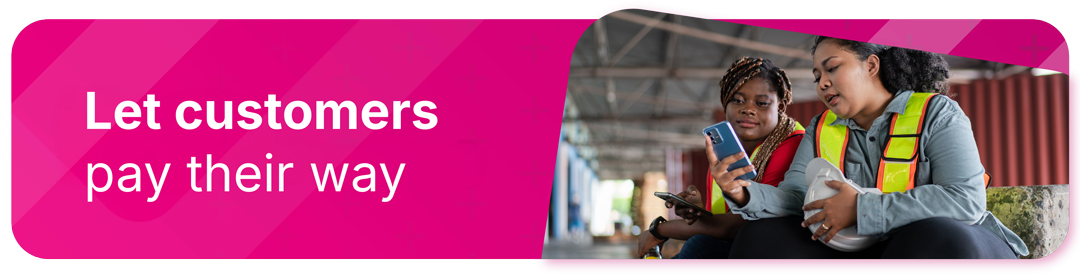
Let customers pay their way
A Klipboard survey of UK distribution companies found that 94% believe offering multiple payment options results in increased customer loyalty.
Clearly, trade businesses recognise the importance of letting customers choose how they want to pay.
When customers can pay using their preferred method, they're more likely to have a positive payment experience, helping strengthen customer relationships and encourage repeat business.
By adding Pay by Bank to your payment methods, you provide another payment option for customers to choose from.
This makes it easier for customers to settle invoices there and then, reducing the likelihood of postponed or delayed payments.
Higher security and reduced fraud risk
Bank transfers can leave customers vulnerable to invoice scams. With a reliance on customers entering payment details, fraudsters have the opportunity to intercept invoices or change bank information, so payments are sent to the wrong account.
To use Pay by Bank, customers approve payments with the same security measures they use to access their online banking, including biometrics, facial recognition, fingerprint ID and two-factor authentication.
This reduces fraud risk for both parties and provides greater confidence that payments will reach the intended account safely and securely.
Give customers the flexibility they’re looking for with Klipboard Money
If you’re already a Klipboard Money customer, we can set up Pay by Bank in minutes within your business management software, free of charge. Simply contact the Klipboard Money team here.
Want to see Klipboard Money in action?
Klipboard Money helps turn everyday payment tasks into a smoother, more efficient operation - so you can:
- Cut down on manual admin and reconciliation.
- Reduce payment and fraud risk.
- Simplify how you take and manage payments.
- Keep cash flowing more consistently.
Book a demo today and see how it works for you.
Contributors

Share
Related resources

Running a plant, tool or equipment hire business is about far more than assets leaving the depot on time. It’s about keeping people, paperwork and payments moving smoothly, often under pressure. From early morning collections to last minute extensions and end of day reconciliation, the working day is shaped by how easily money flows through the business.
