Payments are More than Financial – Unfiltered with Lochan Sim
Why do businesses treat payments as one-size-fits-all? In his latest unfiltered piece, VP of Payments Lochan Sim explores how payments have become more than a financial concern for businesses.
5 minutes


Imagine in your head what the typical, day-to-day consumer transaction looks like.
There’s a customer at a counter, getting ready to pay by card or digital wallet. On the other side of the desk there’s a member of staff, with a terminal, a till point and a monitor.
Add in online payments to this mix, and things get slightly more complicated. A customer might place an order from home, but then pick up the item in store, or have it delivered to their address. They may not be satisfied, so they’ll send the return by post or even take it back into the supplier’s premises.
Digital payments are creating even more ways for customers to complete a transaction.
Yet in B2B, the biggest mistake I see businesses making with payments is assuming every customer should move through the same payment process.
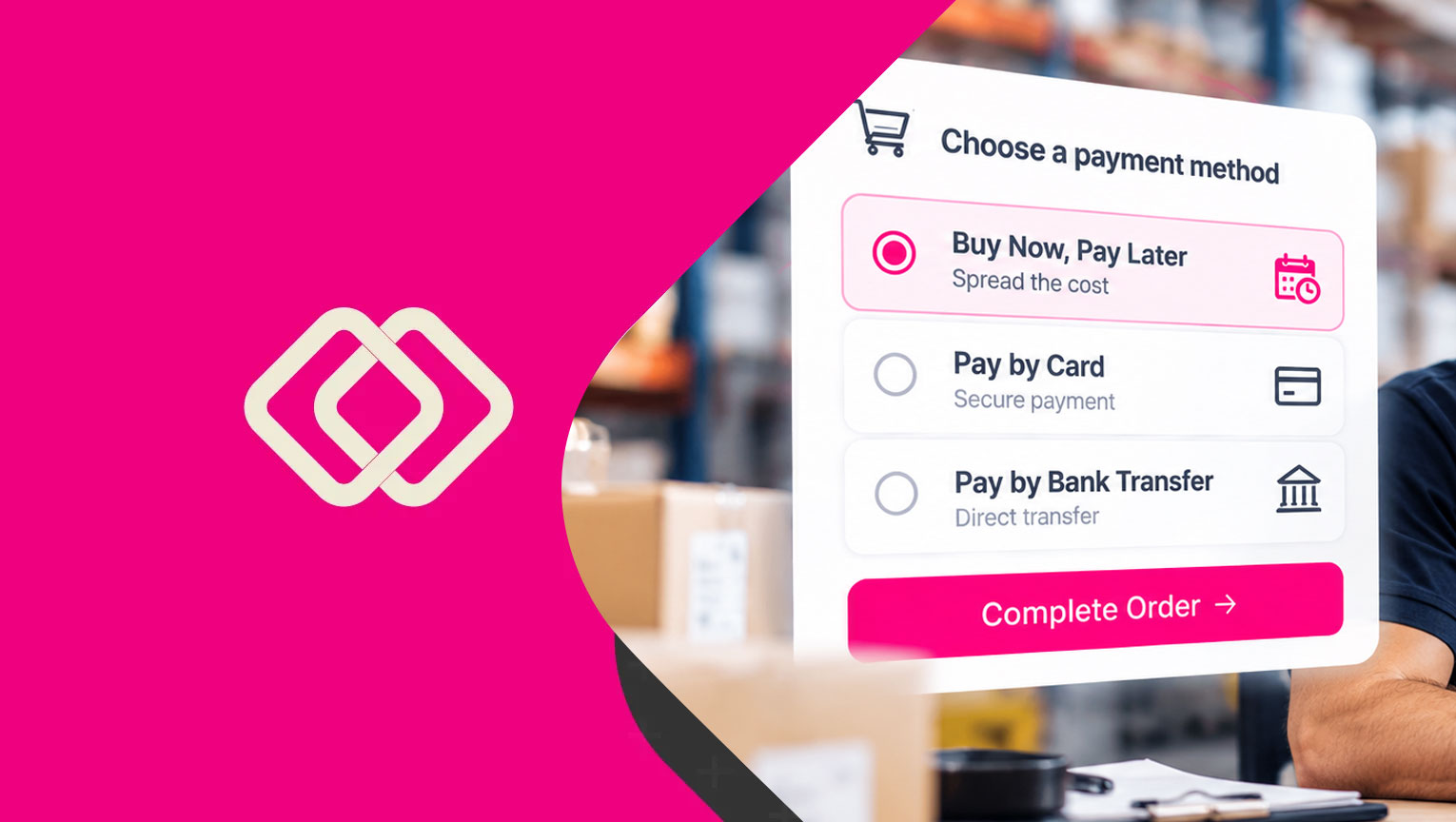
Customers want different ways to pay for different situations
Payment behaviour is highly contextual – especially in B2B. Different customers:
- Pay differently: Some will have a preference for specific methods such as card or bank transfer, or in certain intervals e.g. at the end of every month.
- Require different levels of admin and management: There will be customers that pay at the earliest opportunity, and others that need continuous reminders before they remember to make a payment.
- Create different levels of risk: New customers are unproven, buyers paying on 30-day terms carry greater risk than those paying upfront.
Despite this, many businesses still put every customer through the same payment journey: the same payment options, checks, approvals and follow-up, regardless of who the customer is or how they’re buying.
This often creates unnecessary obstacles, particularly when not all customers want to pay the same way. In some cases, it can even prompt them to abandon a purchase altogether.
It also doesn’t suit repeat buyers, who won’t understand why they need to provide the same details for every transaction.
From the perspective of the business, conducting the same checks, approvals and follow-ups simply isn’t necessary for all customers and transactions.
On top of this, these processes typically rely on disconnected systems, which make gaining visibility of payment status challenging, and often means getting more teams involved, wasting more time and resources.
Payments shouldn’t be one-size-fits-all
Historically, a standardised approach to payments made sense – a single payment process was easier to manage operationally when there was only one invoice flow, one reconciliation process and one set of payment rules.
But businesses of all sizes are now far more complex. They manage multiple channels, remote and mobile payments, and different types of customers – all while catering to significantly higher expectations for speed and flexibility.
And as new payment methods and processes are onboarded, a one-size-fits-all approach starts to break down.
What works well for one customer or transaction type may create friction (and frustration) for another.
Smarter payment journeys are becoming operationally important
This is where I think payment strategy is starting to evolve.
Instead of forcing every customer through the same process, businesses are starting to build payment journeys around:
- Customer behaviour.
- Transaction context.
- Payment timing.
- Admin processes.
- Risk level.
Here's how that compares with a traditional approach to payments:
But what does this look like in practice for businesses? It may mean:
- Sending payment links at different stages, depending on the context of the transaction and the buyer.
- Applying the right level of security to each payment.
- Integrating payment processes directly in your business software, allowing updates to happen automatically.
- Reducing manual intervention for trusted customers.
The goal of building smarter payment journeys is to reduce friction while maintaining operational control.
The future of payments is more operational than financial
I think this is part of a bigger shift happening across the industry. Payments are no longer just about moving money from one place to another. They're becoming part of how businesses manage operational efficiency, customer experience, visibility and cash flow performance.
Looking ahead, this shift is likely to accelerate as automation and AI agents take on more of the administrative tasks involved in buying and selling. In B2B environments especially, businesses will increasingly rely on systems that can handle routine payment, approval and reconciliation processes with minimal manual intervention.
The businesses that succeed will not necessarily be the ones offering the most payment methods or the lowest fees. They'll be the ones building payment journeys that fit naturally into how their operations and customers actually work.
Because ultimately, the best payment journey is the one customers barely notice. It simply works, quickly, smoothly and with as little friction as possible.
About Klipboard Money
Klipboard Money is an integrated payments solution that connects directly into Klipboard business management software. Payments are reconciled automatically into one system without manual entry. Built for distributive trades, garages and rental companies, Klipboard Money helps businesses cut down the hidden cost of payments by helping them to get paid faster, cut manual admin and protect against loss from fraud and errors.
Contributors